
1300 Hospital Dr #220
Mount Pleasant, SC 29464
Mount Pleasant, SC 29464
Effective. Proven. Trusted.

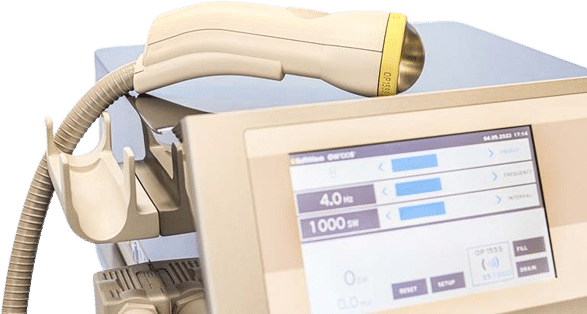

Struggling with Knee or Shoulder Pain that won't improve?
From serious sports injuries causing tissue damage to bone issues and stiffness that comes with age, living with pain is, well, a pain. But it's more than that - it's a stressful, often upsetting way to get through your day, month, and year. Have you ever tried to get out of bed with sore, stiff knees? Most folks would rather just get back in bed. Think you might try exercising with plantar fasciitis? Don't plan on running far or doing cardio for very long. Torn rotator cuff? Without proper treatment, your life might not ever be the same.
Living with pain and the inevitable issues that come with age can seriously affect your wellbeing and happiness. Sure, you could wake up every morning and rely on addicting medications to help you move. Or, you could risk further injury and damage with invasive surgeries that require long periods of recovery and downtime. But those can't be the only two options for treatment, can they?
Fortunately, a new, natural, non-invasive treatment for pain is revolutionizing the medical industry and transforming people's lives. It's giving athletes, average folks, and people of a certain age a reason to be hopeful. It's called Softwave therapy, and unlike many fly-by-night medications and sketchy treatments, it's backed by science and provided by Elite Healthcare Physical Medicine.
If you're barely making it through the day suffering from chronic pain, this FDA-approved drug-free treatment may be for you. Softwave therapy has already been used by thousands of people around the country living with issues like shoulder pain, knee pain, and plantar fasciitis. You could be next.
Though its popularity has only grown in recent years, Softwave therapy - also known as shockwave therapy - has been around for years. In fact, the first systematic study into the benefits of shockwave therapy took place way back in 1950. So, what is Softwave therapy?
Softwave therapy is a method of treatment that works incredibly well for mobility rehab, pain relief, and full-body recovery, usually from chronic pain or injuries. Softwave therapy uses a device emitting low-energy soundwaves that target a patient's injured area. These low-intensity waves boost blood flow and kickstart your body's natural healing processes, relieving long-term pain and helping your body to heal a wide range of injuries and conditions.
The main targets in the body include bones, tendons, and other soft tissues, which are encouraged to regenerate and repair via the shockwaves. Often, shockwave therapy is used in conjunction with other non-invasive treatments like chiropractic care, which we offer at Elite Healthcare Physical Medicine. The results are often incredible, leaving patients wondering why they never tried Softwave therapy before.
Softwave therapy works especially well for:

Better Blood Flow

Collagen Stimulation

Reducing Inflammation

Kickstarting cell growth and healing factors

Breaking down build-ups of calcium
With FDA clearance, little-to-no side effects, and quick application time, Softwave therapy is a welcome alternative for people suffering from pain. Who wants to spend weeks or months recovering from a surgery that might not even work? Likewise, who would want to become dependent on over-the-counter or, even worse, prescription pain meds? Living a life of addiction is a road nobody wants to go down.
Softwave therapy represents a revolution in non-invasive pain treatment; best of all, it's highly effective. Independent studies prove that shockwave therapy helps with pain. 65-91% of patients using shockwave therapy experienced real-deal improvements in damaged muscle and bone tissue, solving their mobility problems and drastically reducing pain. It almost sounds too good to be true, but as many patients at Elite Healthcare Physical Medicine will tell you - it isn't.
Book AppointmentSome of the most common conditions that Softwave therapy treats include:






When you get up in the morning and go to the bathroom to brush your teeth, do you notice a stabbing, sharp pain near your heel? Does the pain go away once you have a chance to walk around? If so, you could have plantar fasciitis. According to the American College of Foot and Ankle Surgeons, this painful condition is quite common. About two million people suffer from plantar fasciitis every year, and almost 10% of all people will experience the condition at least once in their life.
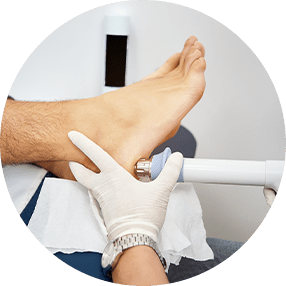

This common foot issue happens when the plantar fascia - a fan-shaped tissue near your heel - gets inflamed. The plantar fascia is a thick strip of connective tissue that links your toes to your heel bone, helping to preserve the arch of your foot. When this band is strained, it causes intensely sharp pain, usually in the morning when you wake up and plant your feet on the floor.
Most folks ignore plantar fasciitis because the pain eventually goes away throughout the day. However, if left untreated, plantar fasciitis can lead to weakness and chronic pain, which may affect daily walking.
Some causes of plantar fasciitis include:
The short answer to this question is not really. Patients with plantar fasciitis will ice the affected area with little-to-no relief since they spend so much time on their feet. It's hard to rest an achy heel if you've got a job that requires you to be on your feet. Anti-inflammatory meds like Advil don't work all that well, either. They may provide temporary pain relief, but in terms of a long-term solution, taking these drugs will cause major side effects.
Book Appointment
When more conservative treatment options like ice and over-the-counter meds don't work, most doctors turn to ultra-expensive orthotics, steroid injections, or invasive surgery. For the average person, those options fail on all fronts, as they carry risks for side effects and may even cause the issue to worsen.
Instead of going under the knife or changing their daily routines, many people suffering from plantar fasciitis are turning to Softwave therapy for relief.
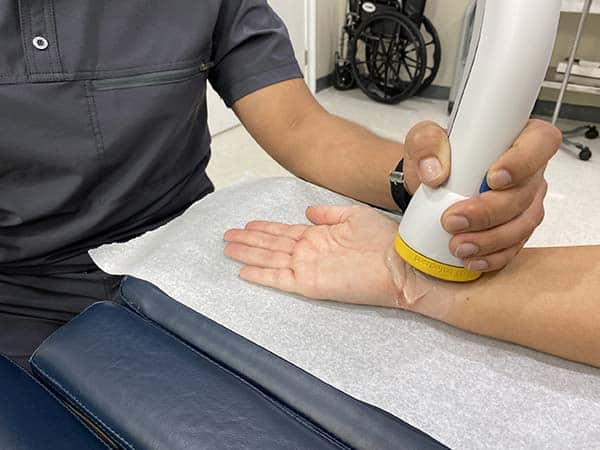
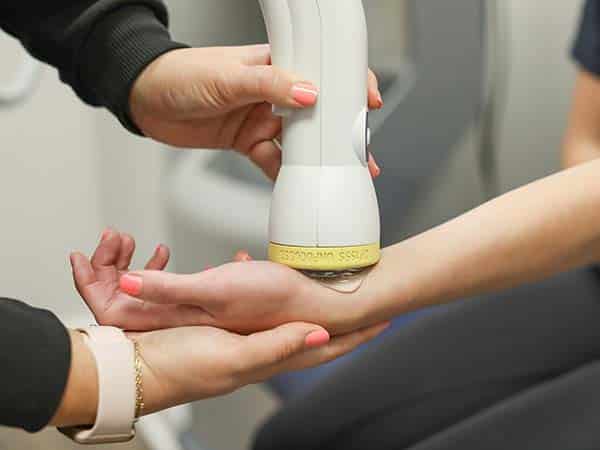
During a shockwave therapy session, our expert providers use a special probe to deliver pressure waves to inflamed tissue. These waves trigger natural healing processes causing new blood vessels to form. In turn, oxygen is supplied to the affected area, reducing inflammation and causing healthy cells to regenerate. Shockwave therapy also produces collagen, which is crucial for connective tissue health.
With just a few visits, many patients find long-term relief from plantar fasciitis without relying on strange drugs or harmful surgeries.
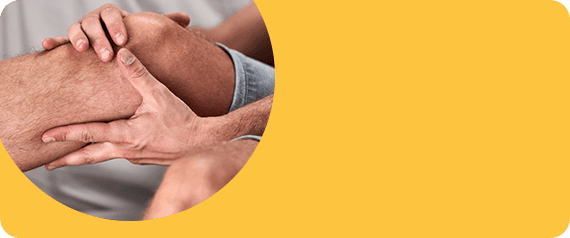
Living with knee pain is just miserable. From knee tendonitis to osteoarthritis, knee pain can prevent you from enjoying activities and affect your day-to-day life. Your knee is a joint comprised of cartilage, bone, ligaments, and fluids. Tendons and muscles within the knee help the joint move. When one of these crucial knee structures is hurt or compromised, it results in knee pain and long-lasting knee problems. This, in turn, leads to difficulty walking at best and debilitating knee issues at worse.
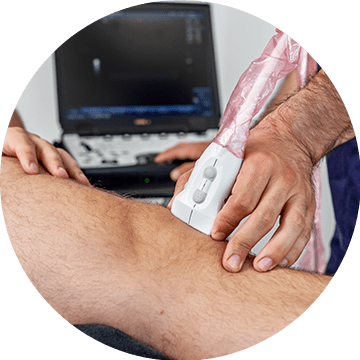

If you're an active person or somebody who plays sports often, you're probably all too familiar with knee pain - especially common conditions like patellar tendinopathy. Also called "jumpers knee," this issue happens at the patellar tendon, which is found on the front of the knee just under the knee cap. When living with this condition, most patients experience pain around the kneecap or lower down on the leg around the tibia.
In addition to injuries and issues like jumper's knee, everyday wear and tear will cause knee pain over time. With time, this knee pain can develop into arthritis. If your knees are swollen, painful, or stiff, you may have arthritis in your knees. Regardless of the kind of knee pain you're experiencing, treatment options have been limited to agonizing surgeries and addicting pain medications. But that all changes with shockwave therapy for knee pain in Isle of Palms, SC.
Though no two knee pain problems are exactly the same, shockwave therapy has been shown to be highly effective for knee pain. In fact, many patients at Elite Healthcare Physical Medicine find relief after just one session. Many times, sessions can be completed in as little as 30 minutes. So if you want to find relief for knee pain on your lunch break, that's definitely possible.
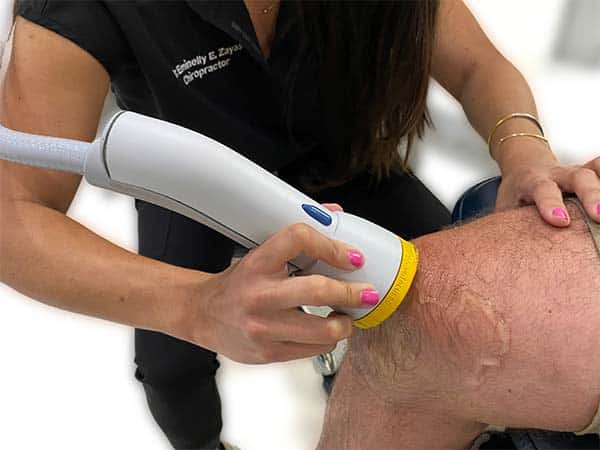
As is the case with plantar fasciitis, Softwave therapy works by sending sound wave and low-energy impulses to the affected area of your knee. These pulses stimulate your body's healing factors, which can help regenerate and repair damaged tendons and tissues. Softwave therapy for knee pain is especially promising for people who have tried other treatments - like surgery and pain meds - with disappointing results.
Benefits include:
Several studies and reviews prove that Softwave therapy can be very beneficial for people suffering from knee pain problems like jumper's knee. A study involving 66 patients with knee pain found that they enjoyed a significant improvement in their reported pain levels with Softwave therapy. In fact, knee pain was reduced by nearly 50% after a single month. When combined with other regenerative and physical therapy treatments at Elite Healthcare Physical Medicine, your days of living with knee pain are numbered.
Book AppointmentHere's a fact for you to consider: Every joint that you have in your body plays a part in your day-to-day life. But when we think of joint issues, we typically jump to knee issues. However, your knees aren't the only joints in your body to go through wear and tear. Your shoulders experience just as much, if not more, wear and tear than your knees. We put a strain on our shoulders just about every time we use or move our arms. Our shoulders play a pivotal part in living a normal life. When they begin to deteriorate over time due to age or overuse, it creates a litany of painful problems.
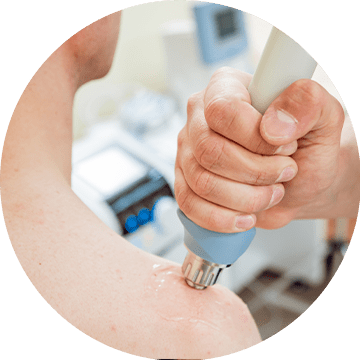

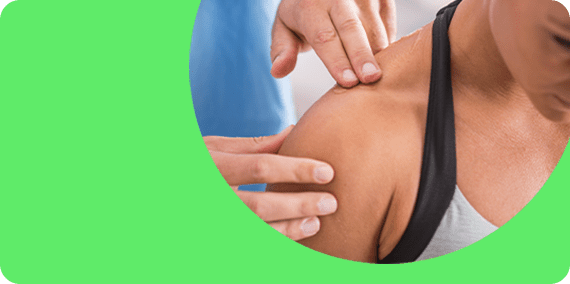
There are many causes of shoulder pain, like deterioration, inflammation, and trauma. Of the many painful shoulder conditions affecting Americans yearly, rotator cuff tendonitis and arthritis are very common. Also called calcific tendinitis, rotator cuff pain is caused by built-up calcium deposits on the shoulder's tendons, which connect your rotator cuff to nearby muscles and bones. This painful condition is usually linked to sports, like basketball and volleyball, or in professions requiring repetitive movements, like in the plumbing industry.
Some common symptoms of shoulder pain and rotator cuff tendinitis include:
Though strengthening exercises and some medications provide temporary relief for shoulder pain, they're not meant as long-term solutions. Luckily, Softwave therapy for rotator cuff pain in Isle of Palms, SC, can help.

Shockwave therapy has been shown to work wonders for shoulder pain. Low-intensity shockwaves break up calcium deposits and jumpstart your body's healing processes, stimulating blood flow and healthy cell growth. Shockwave treatment is especially effective for long-term shoulder pain since it releases stem cells, sends growth factors to the affected area, and boosts capillary production. Shockwave therapy has also been shown to break down scar tissue and eliminate trigger points, all of which decrease shoulder pain. This relief is most often long-lasting, unlike other treatments like medications and injections.
Many studies support the efficacy of Softwave therapy for shoulder conditions like rotator cuff pain and calcific tendonitis of the shoulder. In a study of 84 patients living with long-term rotator cuff tendonitis, participants in the treatment group saw a significant decrease in the intensity of their shoulder pain. Another study related to shockwave therapy for calcific tendonitis found that 86.6% of patients experienced fewer calcifications.
If you're having to live with rotator cuff pain or another type of shoulder issue, choosing Softwave therapy may be your best course of action.
Book AppointmentWhether you're sick of living with intense heel pain from plantar fasciitis, the mobility issues associated with knee pain, or the day-to-day struggles of rotator cuff degeneration, you'll find hope at Elite Healthcare Physical Medicine. Unlike some medical clinics, our team of doctors and specialists focus on an integrative, multidisciplinary approach to healing. Instead of relying on addictive medications and invasive surgeries, we prefer to address the underlying causes that our patients face.
We combine several all-natural pain relief therapies so that your shoulder pain, knee pain, joint pain, and foot pain go away for good. We resolve pain by using healing treatments that restore function and improve mobility for the long term. Our state-of-the-art regenerative medicine treatments, used hand-in-hand with proven chiropractic techniques, will stimulate your body's healing power from within. If your pain is related to muscles, nerves, and bones, our doctors can help you overcome discomfort, injury, or medical conditions affecting these systems.
If you've been unable to resolve your pain or have become dependent on painkillers to cope, Softwave therapy may be the natural solution you need. It all starts with a quick call to our office, so we can begin to understand your needs. When you come for your first visit, our doctors will find the personalized treatment you need so that you can manage your pain in a non-invasive and drug-free environment manner.
Book AppointmentISLE OF PALMS, S.C. (WCBD) — The ongoing conflict between the South Carolina Dept. of Health and Environmental Control (DHEC) and a homeowner on the Isle of Palms has now gone to court.After storms in August and December 2023 led to significant beach erosion, Rom Reddy, an oceanfront property owner, took matters into his own hands by building a wall to prot...
ISLE OF PALMS, S.C. (WCBD) — The ongoing conflict between the South Carolina Dept. of Health and Environmental Control (DHEC) and a homeowner on the Isle of Palms has now gone to court.
After storms in August and December 2023 led to significant beach erosion, Rom Reddy, an oceanfront property owner, took matters into his own hands by building a wall to protect his property near Breach Inlet from beach erosion.
However, earlier this month, DHEC officials told News 2 that anything built on critical areas of the coast, like beaches, needs a permit. They added that after investigating Reddy’s wall, they issued Reddy and the contractor cease and desist directives because it was an “unauthorized structure.”
However, DHEC officials said Reddy’s work on the wall continued even after the directives were issued.
Now, attorneys for DHEC have taken the battle to court, filing a temporary restraining order (TRO) and petition for injunctive relief in South Carolina Administrative Law Court.
“Due to the Respondents’ egregious disregard of OCRM’s Notice to Comply and the two Cease and Desist Directives, the Department has no adequate remedy at law other than to seek judicial intervention to compel the Respondents to immediately cease their unauthorized actions in the critical area,” the court filing reads.
This week, Reddy’s lawyers responded to the agency’s court filings requesting that the judge deny the motion for a TRO and petition for injunctive relief.
Reddy’s lawyers argue that his wall is not located in a critical area and that DHEC lacks the subject matter jurisdiction to issue the cease and desist in the first place. “In issuing these directives, Petitioner [DHEC] is unilaterally and unfairly extending its jurisdiction to convert private property into a public beach,” the court filing reads.
They also say that the cease and desist is a moot point because no ongoing work was being done when DHEC filed the TRO. “Petitioner [DHEC] seeks a TRO and injunctive relief to allegedly stop Respondents from ‘continuing to install a hard erosion control structure adjacent'” to the Property. As of the date of this filing, no ongoing work is being done on the Property: therefore, Petitioner’s cease-and-desist directives are moot,” they wrote.
Reddy’s attorneys also filed a countersuit against DHEC and the city of Isle of Palms with several claims, including that they violated Reddy’s constitutional rights. “DHEC has engaged in actions and inactions that have converted Respondents· private property into a public beach without justcompensation in violation of the South Carolina Constitution and the United States Constitution,” they argue.
Reddy’s attorneys also claim that DHEC and Isle of Palms leaders failed to maintain the beach near his property. In the court filing, they write, “DHEC also fails to note that prior to the Idalia storm damage, in June of 2023, Respondents sent various letters and notices of the vulnerability of the Isle of Palms properties due to improper beach renourishment by Isle of Palms and Petitioner [DHEC].”
Reddy’s lawyers also requested the case be moved to circuit court for a jury trial.
News 2 reached out to Reddy for comment about the court filings. In a statement, he said “state jurisdiction over private property is set by the SC General Assembly and last approved in 2018. DHEC, a state agency has illegally taken upon itself the task of claiming jurisdiction property by property based on a single storm. This provides Government unlimited and varying jurisdiction over private land. This is unconstitutional and will not stand”.
When News 2 asked DHEC for comment, an agency spokesperson responded “DHEC doesn’t comment on pending litigation. DHEC’s Petition For Injunctive Relief and Motion for TRO and Preliminary Injunction explain in detail the Department’s position.”
The Chief Administrative Law Judge has set a hearing date on April 18 for DHEC’s motions. Both Reddy and DHEC will present their evidence at this time.
Editor’s note: This story has been updated to include additional information from the city, including the fact that IOP city does not set prices for the new park area.—ISLE OF PALMS, S.C. (WCBD) – Construction is underway on a new Isle of Palms waterfront space that will include a pier and other amenities.Chaundra Yudchenko, who serves as the city’s public relations and tourism coordinator, said the Isle of Palms Public Dock Renovation Project will include a new 16-foot-wide pier with swings and b...
Editor’s note: This story has been updated to include additional information from the city, including the fact that IOP city does not set prices for the new park area.
—
ISLE OF PALMS, S.C. (WCBD) – Construction is underway on a new Isle of Palms waterfront space that will include a pier and other amenities.
Chaundra Yudchenko, who serves as the city’s public relations and tourism coordinator, said the Isle of Palms Public Dock Renovation Project will include a new 16-foot-wide pier with swings and benches.
The project also includes a floating dock with American Disabilities Act (ADA) compliant kayak and stand-up paddleboard launching.
Yudchenko said the public dock is not intended to be used for boat mooring; it will be available to the public for recreational use and passive water activities.
Construction of the public dock is set to begin in March with completion in May.
It’s all part of a 2020 vote by Isle of Palms City Council to improve the island’s marina area.
And while some are excited to have a new area to spend time with their family, others are concerned about potential costs.
“It’ll be nice to have something to bring the grandchildren over to and stuff like that- so, it’ll be nice,” said part-time resident, Dale Johns.
The project is an investment city council member Blair Hahn said was expensive but well worth it.
“The city has gone to great expense to redo the dock and we’re going to have a little green space,” Hahn said.
However, a visit to the park could cost more for non-residents. The plan is to charge visitors for parking and to launch a boat from the public dock. The cost to park is $3.50 per foot of the trailer plus a utility fee per day.
The private marina operators set fees for the new park area – they are not set by the city.
One non-resident who wanted to stay anonymous said many people are upset about this part of the plan. “The city is granting its residents special parking privileges and charging nonresidents exorbitant fees, all while calling this a “public dock.”
Hahn says fees for accessing public parks are nothing new in Charleston.
“It’s no different than Charleston County Park. They charge $20 a car to park on the island so unfortunately, that’s just a reality,” Hahn said.
The nonresident went on to say not everyone will be able to pay the fees.
“The city of Isle of Palms needs to treat residents and nonresidents the same at its “Public park” and charge everyone a fair amount, or allow free parking for everyone,” they said.
The city, according to Yudchenko, has not discussed implementing any feeds for the use of the public dock.
“Marina docks, boat launch fees, and The Outpost marina store are managed by Coastal Marinas, which is a tenant of the city. Fees for boat launching, dockage, and storage are determined by the marina tenant,” said Yudchenko.
Despite the concern, Hahn believes the park will still serve as a popular meeting spot for locals and visitors.
“We are doing everything we can to be resident-friendly and visitor-friendly and to bring people to Isle of Palms, but there’s always a cost to everything you do,” Hahn said.
Additionally, Yudchenko said the city is working with the marina restaurant, Islander 71, on a new parking layout to “increase the number and efficiency of parking spaces available to residents, visitors, and restaurant customers.”
The project is expected to be completed by May of this year.
The Isle of Palms is the latest beachfront area now dealing with an uptick in coyote sightings and attacks. (WCIV)ISLE OF PALMS, S.C. (WCIV) — The Isle of Palms is the latest beachfront area now dealing with an uptick in coyote sightings and attacks.As a result, the city is taking action including more signage and setting out traps.John Hendricks likes to take his dog Zoe on early morning walks on the beach at Isle Palms. He's had his share of run-ins with coyotes. The most recent ended with Zoe being attacked....
The Isle of Palms is the latest beachfront area now dealing with an uptick in coyote sightings and attacks. (WCIV)
ISLE OF PALMS, S.C. (WCIV) — The Isle of Palms is the latest beachfront area now dealing with an uptick in coyote sightings and attacks.
As a result, the city is taking action including more signage and setting out traps.
John Hendricks likes to take his dog Zoe on early morning walks on the beach at Isle Palms. He's had his share of run-ins with coyotes. The most recent ended with Zoe being attacked.
"She definitely saw them. She chased after them," Hendricks said. "She realized that she got a little too deep. We left, got her stitches, and had to put her on quarantine for 45 days."
Zoe is now recovering, but the coyote attack has left her a little skittish when she heads to the beach.
"I took her down the same path. At first, she's like, 'Oh, right, we're at the beach.' But then, when she realized what path she was on, she's like, 'I'm not going down that path.' We turned around and went back to the car. Today, I took her down a different path and she was a little tentative," said Hendricks
Now this most recent attack has changed Hendricks' mind on trying to co-exist with coyotes.
"Before, I was much more live and let live, and we gotta learn how to get along. But after this event, I'm like, you try to take my life, so now I'm willing to take your life," Hendricks said.
Dr. Marian Shuler Holladay treated Zoe.
"They engage the dog almost in a playful manner, and then when the dog goes over, there seem to be others waiting. All of the animals I've seen attacked – all of the bite marks – seem to be in the hind end and the hind haunches, in the flanks, and in the abdomen," Holladay said.
Even a minor attack can come with a heavy price tag.
"Sometimes they need repairs. Sometimes they need drains put in and sutures to close the lacerations. Sometimes it can be anywhere between $500 to $1,500 or more per incident," Holladay said.
Isle of Palms has increased signage on the beaches and is working with a trapper to set traps. They are also holding a public safety meeting at the Isle of Palms City Hall, next Tuesday from 9-10 AM. Hendricks believes the city is doing what it can to keep the beach safe.
"They're not doing knee-jerk reaction. I think they're gathering data. I think they're doing what's appropriate."
ISLE OF PALMS, S.C. (WCBD)- Parking on the Isle of Palms continues to be a contentious topic.Some saying that a parking plan approved by the South Carolina Department of Transportation in 2015 which established resident-only parking zones needs to be revoked.The parking plan that was approved in 2015 eliminated a significant number of free parking.The approval was unpopular among the Charleston Beach Foundation, a group that advocates for more public access to the beaches, when it was first approved.Now, this plan...
ISLE OF PALMS, S.C. (WCBD)- Parking on the Isle of Palms continues to be a contentious topic.
Some saying that a parking plan approved by the South Carolina Department of Transportation in 2015 which established resident-only parking zones needs to be revoked.
The parking plan that was approved in 2015 eliminated a significant number of free parking.
The approval was unpopular among the Charleston Beach Foundation, a group that advocates for more public access to the beaches, when it was first approved.
Now, this plan is now receiving renewed pushback.
“For Isle of Palms to eliminate parking in those right of ways is wrong to begin with and probably unconstitutional,” Parking advocate, Michael Barnett said.
Barnett, who started a petition over beach restrictions in the Lowcountry, says this parking issue has come up again after Isle of Palms voted to deny the short-term rental cap.
Barnett said, “The Isle of Palms is allowing short term rentals throughout the island, essentially making the residential only districts, commercial districts.”
Monday morning, Myra Jones with the Charleston Beach Foundation sent the City of Isle of Palms a letter, asking for the plan to be revoked, arguing IOP no longer has legitimate “residential” areas since the resolution to cap short-term rentals on the island failed.
“So, the SCDOT needs to now go back, review the 2015 parking plan, request that the Isle of Palms redo the parking plan, and they need to give back all residential only parking, they need to give back all 3,000 parking spaces that they took in 2015,” Barnett said.
Isle of Palms city council members are fighting back.
Councilman Blair Hahn providing a statement reading, “In response to Myra Jones’ letter to City council dated November 27th, 2023, full council has not had an opportunity to discuss. However, Ms. Jones’ continued attempts to characterize the Isle of Palms as not resident friendly, not tourism friendly, not visitor friendly is nonsensical. Isle of Palms provides 8 times more public beach parking than is required by the SC Beach Front Management Act and more public parking per mile of beach than any other community in South Carolina.
Ms. Jones has previously taken her grievances to the South Carolina Courts and has lost. In my opinion, this is nothing more than another attempt of Ms. Jones to ignore the laws of the State and attempt to force her will on Charleston beach communities.
IOP city council members say they plan to discuss this more in future council meetings.
ISLE OF PALMS, S.C. (WCSC) - The Isle of Palms City Council approved an emergency ordinance on erosion control Tuesday evening.The ordinance passed with a 7-2 vote that will allow homeowners to build seawalls or revetments along their personal property lines. This would apply to 100-914 Ocean Boulevard, a 1.3-mile-long stretch of road and Breach Inlet.The council discussed two options. Option one creates a setback where homeowners must build their structure within a selected 35-foot window. The second option leaves it up to the...
ISLE OF PALMS, S.C. (WCSC) - The Isle of Palms City Council approved an emergency ordinance on erosion control Tuesday evening.
The ordinance passed with a 7-2 vote that will allow homeowners to build seawalls or revetments along their personal property lines. This would apply to 100-914 Ocean Boulevard, a 1.3-mile-long stretch of road and Breach Inlet.
The council discussed two options. Option one creates a setback where homeowners must build their structure within a selected 35-foot window. The second option leaves it up to the South Carolina Department of Health and Environmental Control to decide where they can or cannot be built.
The council voted on option one, with an amendment to where the seawalls can be built. Instead of a 35-foot window, the council changed it to 20-feet.
“Sometimes it’s two readings, sometimes it’s three, but tonight it’s an emergency one,” Isle of Palms Mayor Phillip Pounds says. “It’s been one thing after the other for the last six or seven months so the city has been in an emergency basis. This is kind of the next step.”
Many beachfront properties are still feeling the impacts of Hurricane Idalia, which tore away much of the beach access and caused severe erosion damage. The storm surges and coastal flooding that followed added to the problem.
If the council votes yes on the ordinance, homeowners would be able to build a revetment, which is a sloping structure, or a seawall, a vertical structure, to battle erosion damage. These entities would be the sole responsibility for property owners and must comply with material or construction requirements.
Seawalls would need to be a maximum height of 10 feet and cannot be made visible. The structures cannot be made of recycled concrete or materials and must be designed by engineers who can confirm it would not have a negative impact.
Coastal Conservation League Director of Land, Water and Wildlife Riley Egger called the ordinance a “misstep.” She asked the city to consider alternatives like renourishment instead.
“Restore dune systems that provide for wildlife habitat, protect private property owners and provide for public access,” Egger says. “Seawalls provide a false sense of security.”
Pounds says the Army Corp of Engineers is set to begin a project within the next month that would rebuild the dune back.
“The sandbags and scraping has really just been a band-aid,” Pounds says. “It was really just to get over the hump of this large project that’s coming.”
The ordinance also requires neighbors and the South Carolina Department of Health and Environmental Control Ocean and Coastal Resource Management be notified before construction begins. The department is currently the only entity that can authorize the changing of critical areas.
The department prohibits the use of heavy machinery, equipment or materials within the critical area for installing a seawall or revetment. Sand must be from an upland source.
If a seawall or revetment is not taken care of properly, the city or its coastal engineer can remove it.
City ordinances allow emergency action for issues believed to affect life, health, safety and property. If the ordinance passes, it will be effective immediately and be active for 60 days.
Copyright 2024 WCSC. All rights reserved.

 (843) 936-6238