
1300 Hospital Dr #220
Mount Pleasant, SC 29464
Mount Pleasant, SC 29464
Could you imagine going through life every day with near-debilitating, chronic back pain? Back pain is one of the most common ailments in America - it's estimated that 8% of all adults, or 16 million people, suffer from chronic back pain in the U.S. every year. If you've never experienced a back injury or pain, be thankful. Chronic back pain affects every aspect of a person's life, from participating in sports to limitations with everyday activities, like cooking dinner. In fact, many people with chronic back pain can't even make a reliable living and put food on the table. Almost 83 million workdays are lost every year due to choric back pain.

The inability to work and provide isn't just a physical issue - it can become an emotional one too. Many people suffering from chronic back pain also suffer from depression and anxiety. Unfortunately, in the past, chronic back pain sufferers wanting to avoid addictive medications and invasive surgeries had few viable relief options. However, if you're suffering from a chronic back issue like sciatica, a pinched nerve, or a bulging disc, pain relief may be closer than you think.
Modern chiropractic care and, more specifically, a spinal decompression chiropractor in John's Island, SC, may be the long-term solution you need for chronic back pain.
A common misconception is that chiropractors only adjust your back and neck when, in fact, they treat the whole body with all-natural treatments. Here at Elite Healthcare, our doctors focus on your overall health, not just pain. We want to find and address the underlying causes of your symptoms. If you're unfamiliar with an integrative approach to medicine, this strategy may seem new. Our chiropractic care is less about putting a band-aid on the problem and more about finding a natural, long-term solution to your pain.
Fortunately, our experienced chiropractors provide the best in natural pain relief. Prescription and over-the-counter pain medications mask the symptoms you're experiencing versus getting to the cause of your pain. Pain is often the result of your spine being out of alignment, which leads to nerve issues. Once your spine is back in alignment, the nerves function correctly again.
Because our chiropractic center offers a combination of different therapies and non-surgical treatments, we provide a comprehensive approach to healing. Depending on the extent of your back problems, spinal decompression therapy may be the answer to your chronic pain problems.
Initially developed in 1985 by Dr. Allan Dyer, spinal decompression has been used by chiropractors for years. Unfortunately, spinal decompression is often passed over as a viable treatment, despite its numerous benefits.
In the past, patients suffering from chronic back pain issues like herniated discs were usually prescribed powerful medications. They were instructed to refrain from physical activities, referred to a physical therapist, and sent on their way. While physical therapy has an important role in back pain recovery, some back conditions need a more comprehensive treatment approach. For those patients, surgery seemed like the only option.
Today, patients with chronic back pain have many more options to consider. One of the most effective treatments for serious back pain is spinal decompression. This proven therapy, provided by Elite Healthcare, has been shown to significantly reduce pain and help patients live a normal, even active lifestyle once again.
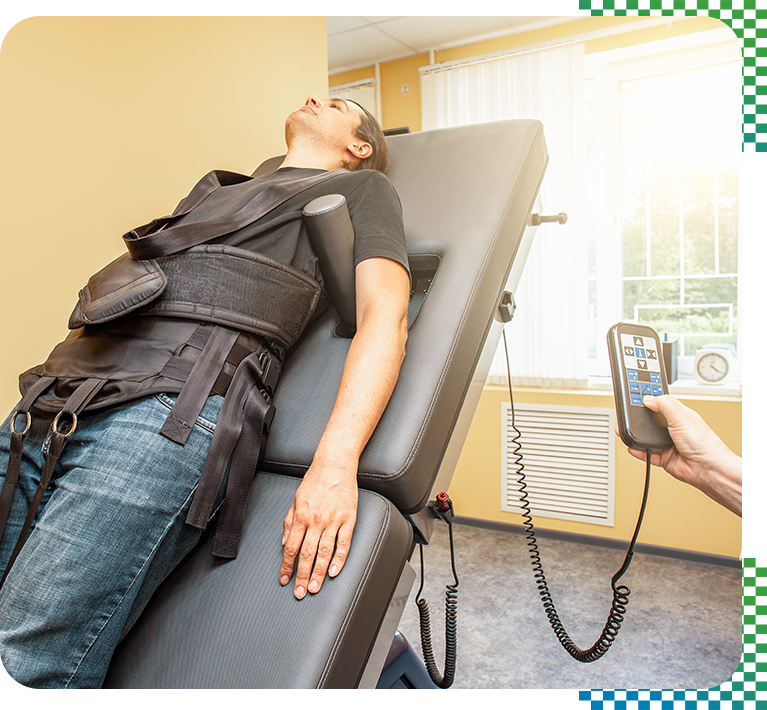
Spinal decompression, also called Lumbar Cervical Decompression Therapy (LCD Therapy), is a very effective non-surgical solution to chronic back pain problems. If you're like most patients, your back pain is caused by disc issues related to your spine. This type of therapy uses computer technology and a spinal decompression machine in cityname, state, to stretch your spinal column slowly and gently, relieving abnormal pressure on the discs in your back, which sit in between your vertebrae.
This precise stretching action causes negative pressure to form inside the discs in your back, making them retract. With time, this negative pressure causes a reverse vacuum of sorts that actually draws your protruding discs into place. When pressure is removed from the disc segments in your spine, you experience much-needed pain relief.
The primary purpose of spinal decompression therapy is to provide you with immediate pain relief while creating a healthy environment to heal your spinal disc condition. Some of the most common conditions that spinal decompression therapy treats include:
This happens when spinal discs in your back are pushed outside of the spinal canal. When pushed outside of their usual space, these discs can put pressure on the nerves in your spine, resulting in localized pain and pain throughout your body. If a bulging disc is left untreated, it has a high chance of rupturing, which can necessitate surgery and longer recovery time.
Herniated discs are discs in your back that fracture or crack and leak fluid. The fluid or gel that leaks from a herniated disc may irritate the nerves in your back. When this happens, you may experience an intense burning sensation that shoots up and down your lower back and legs.
As you grow older, joints in your body, like your knees and hips, begin to wear away with time. The same thing can happen to the discs in your back. Often caused by heavy lifting or a family history of spine problems, degenerative discs are painful and can lead to serious situations. In advanced cases, bone spurs can form and affect the nerves of your spine.
When a herniated disc or bone spur begins to put pressure on the nerves in your back, it often causes sciatica. Sciatica is a common back problem that causes pain to radiate from your lower back down your legs via your sciatic nerve. Sometimes, this pain is only felt in one of your legs.
This condition is similar to arthritis of your spine, where the cartilage inside your facet joint breaks down and becomes inflamed. The result is often intense neck and back pain. It's most often caused by degenerative changes in the joints located between the bones of your spine.
This painful condition manifests when the space in your backbone is too small. When this happens, pressure impacts your spinal cord and the nerves that travel through it. Like other conditions treated by a spinal decompression therapy cityname, state, stenosis is caused by wear-and-tear in your back, which forms arthritis.
This term is often used to classify a range of back problems, most often caused by a pinched nerve root in your spinal column. This pinched nerve root may occur in different locations down your spine, like the lumbar or thoracic areas. Usually caused by a narrowing of the space where your nerve root leaves the spine, symptoms of this condition include pain, tingling, numbness, and weakness.
If you're looking for a safe way to relieve your chronic back pain, spinal decompression should be on your list of treatments to consider. This painless procedure is backed by research showing higher success rates in many patients when compared to spinal surgery. Unlike many medications, spinal decompression from Elite Healthcare Physical Medicine is designed to correct the condition you're facing while also minimizing costs and eliminating recovery and downtime.
Some of the most popular reasons why patients choose spinal decompression over surgery and other treatments include:
Invasive procedures, like back surgeries, often leave the patient racked with pain, long recovery times, and complications. Sometimes, the surgery doesn't work as intended, leaving the patient responsible for a therapy that didn't work correctly. As a non-invasive treatment, spinal decompression therapy can treat back and neck pain without needles, incisions, or harmful manipulations of the spine.

Getting back pain relief from surgery is far from guaranteed. However, because spinal decompression targets the underlying causes of your back pain, it's a much more effective long-term treatment. Spinal decompression is not a quick fix. When coupled with positive lifestyle changes like losing weight, you can maximize the pain-relieving benefits of spinal decompression.

Surgery of the back and spine requires the patient to be bedridden and uncomfortable for days and even weeks. Recovering from back surgery is no easy feat and often requires strong pain medications to help. Sometimes, back surgeries don't go as planned, causing complications and worse scenarios. Spinal decompression, on the other hand, is very effective and doesn't require much recovery time at all. Once your spinal decompression session is over, you'll probably be able to drive yourself home from our office.

One of the least talked about issues with back pain medications is that they only treat the pain, not the underlying causes. For many patients, relying on meds to relieve back pain fosters dependency on pain pills. Pain pill addiction is a very serious issue in the U.S., often leading patients down a dark path. With spinal decompression, you won't have to worry about taking pills for pain relief. That's because the root causes of your back pain are addressed, not just the symptoms.

If you were to look at the cost of surgery and subsequent years of prescription medication, you might be shocked. When compared to spinal decompression, surgery is a much more expensive treatment to consider. You've got to take the cost of surgery into account, but also the fact that you'll be forced to take time off work. By choosing spinal decompression therapy, you're choosing a safe, non-surgical treatment that doesn't require any time off work.

Spinal decompression relieves pressure on disrupted discs, causing them to retract back into place. This revolutionary treatment also lets oxygen, fluids, and nutrients re-enter your spinal discs, which provides additional healing.
 (843) 936-6238

By now, you probably have a better idea of how spinal decompression can help rid your life of back pain. But spinal decompression treatment does more than help with bulging discs, herniated discs, arthritis, and more. It has also been shown to provide patients with important quality-of-life benefits.
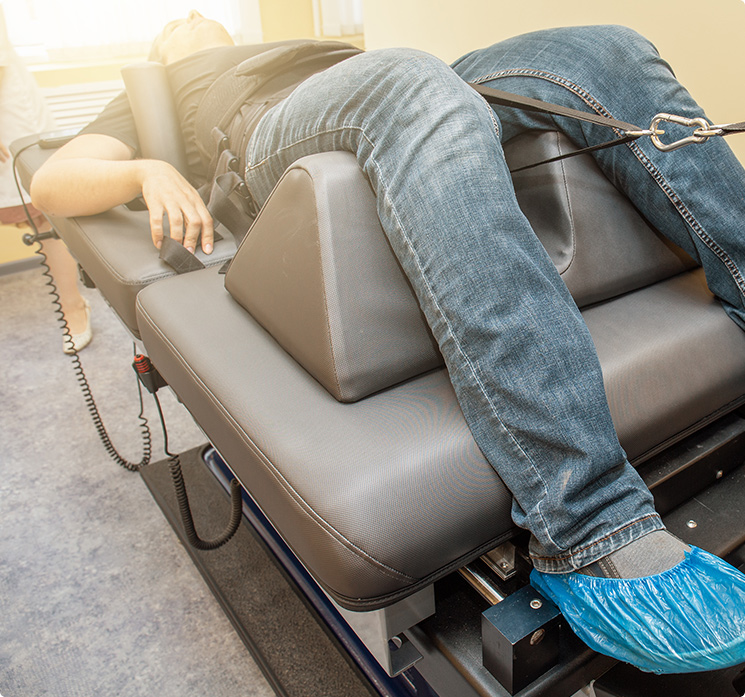
As mentioned above, harsh surgeries leave you bedridden and unable to work for long periods of time. Spinal decompression allows you to jump right back into the workforce, so you can continue providing for your family. Plus, reducing your back pain naturally increases your mobility since you won't be stressing about hurting yourself while moving. Instead, you'll be living in the moment.
One of the worst symptoms affecting people with back pain is the inability to sleep well. Sleeping with back pain can be horrible, causing you to toss and turn to find a comfortable spot. As soon as you find one and get settled, your back starts to hurt again. It's a vicious cycle, but adjusting your spine and relieving pressure with spinal decompression will help you get a good night's rest.
Did you know that when your spine is decompressed, it helps fluids circulate throughout your body? These fluids actually flush your lymphatic system, which helps support your overall immune system. Better circulation also benefits your brain and can help boost concentration and memory. The improved circulation from spinal decompression may also distribute oxygen and nutrients to your skin, creating a multi-benefit effect.
We are happy to answer your questions, and help you find the services you need. Please message us to get started.
At Elite Healthcare Physical Medicine, we practice an integrated approach to pain relief and chiropractic care. Our goal is to restore your spine to its proper alignment, which speeds up your recovery time and prevents additional injuries. If chronic back pain has taken over your life, it's time to visit our chiropractic office for a thorough evaluation.
Ask yourself this: Have you been suffering from headaches and sleepless nights due to muscle strain? Is your ability to work and put food on the table compromised due to a pinched nerve? No amount of over-the-counter pain medication can provide a long-term fix for such an issue. Thankfully, our chiropractors have years of experience providing relief to patients just like yourself.
After a comprehensive exam, our doctor will create an individualized treatment plan tailored to your body. That way, we can address the full scope of your symptoms by correcting any root causes of your back pain.
From minor chiropractic adjustments to spinal decompression treatment, we'll find the solution that your back and body need to heal correctly. If you're ready to get back on the road to better health, we're here to help every step of the way. Contact our Elite Healthcare Physical Medicine today to get started.
(843) 936-6238
CHARLESTON COUNTY, S.C. (WCIV) — Clean-up efforts are underway after vandalism resulted in a 60-gallon diesel fuel spill on Johns Island, officials with Charleston Water System said Monday.The diesel fuel spilled into a stormwater ditch behind homes along Colonel Harrison Drive that leads to the Stono River. Residents initially discovered and smelled the fuel spill over the weekend. The South Carolina Department of Health and Environmental Control was called on Sunday to help with the spill.Read more: ...
CHARLESTON COUNTY, S.C. (WCIV) — Clean-up efforts are underway after vandalism resulted in a 60-gallon diesel fuel spill on Johns Island, officials with Charleston Water System said Monday.
The diesel fuel spilled into a stormwater ditch behind homes along Colonel Harrison Drive that leads to the Stono River. Residents initially discovered and smelled the fuel spill over the weekend. The South Carolina Department of Health and Environmental Control was called on Sunday to help with the spill.
Read more: "Successful oil spill cleanup in Charleston by Coast Guard, no marine life threats."
“Our contractor cleaned up a portion of the spill, immediately called in a professional environmental remediation company, and notified SC DHEC and the EPA’s National Response Center,” said Mike Saia, Charleston Water System's public information administrator. “It may take several days for them to recapture all remnants of the fuel.”
This is the third instance of vandalism to contractor equipment in recent weeks, and the Charleston County Sheriff's Office is investigating.
“I mean it is a very, in depth vandalism. It's not just a rock through the window. It’s someone who came out here to destroy this 200-something thousand-dollar machine,” said Chad Hunter, owner of Hunter Landworx Construction, the contractor onsite.
Hunter showed up to his Johns Island job site Monday expecting to quickly finish a project he’s been working on since October. Instead, he found his machinery completely vandalized.
“There are wires in there, cut and hidden like that. We wouldn't be able to find it if we didn't see that all the fuel around it, my guys would've gotten in the machine. He put rocks and all in our engine to try to blow the engine up,” Hunter said.
But the damage doesn’t stop there.
Read more: "Suspicion arises over two Colleton County mobile home fires in three days."
The vandalism led to a 60-gallon diesel fuel spill into the surrounding area along the Stono River. Charleston Water System owns the construction project, and its staff says they’ve never seen damage this bad.
“We don't see a lot of vandalism. If we do, it's very, very minor, and easy to repair. But this is a different situation because not only did the person damage the equipment related to the job, but they've also damaged the environment,” Saia said.
Saia said they were able to soak up as much of the liquid fuel as possible and the Coast Guard confirmed to CWS that the spill didn't reach the river.
Now, Hunter must pick up the pieces.
He said the damage to his machine alone will cost a few hundred thousand dollars and his crews are now behind on all their current projects.
“We're out here to clean up somebody's mess as well as take time from our family and slow down the project. I mean, it's hurting everybody, the neighborhood, everything around us is just getting messed up from one person,” Hunter said.
“One hour's worth of work is causing weeks of fix-up.”
News 4 has reached out to CCSO for more information.
Management just opened up bookings for after the planned Aug. 1 grand opening of the luxury Auberge-operated property, which will include three food-and-beverage establishments.Located within Kiawah River, a 2,000-acre master-planned resort development off Betsy Kerrison Parkway, the boutique lodging will have 72 guest rooms, 19 villas, riverfront dining and a full-service spa, among other amenities.The signature restaurant will be Linnette’s, which will focus on coastal cuisine with wood-fired dishes from a locally sourc...
Management just opened up bookings for after the planned Aug. 1 grand opening of the luxury Auberge-operated property, which will include three food-and-beverage establishments.
Located within Kiawah River, a 2,000-acre master-planned resort development off Betsy Kerrison Parkway, the boutique lodging will have 72 guest rooms, 19 villas, riverfront dining and a full-service spa, among other amenities.
The signature restaurant will be Linnette’s, which will focus on coastal cuisine with wood-fired dishes from a locally sourced seafood menu. A riverside lounge will serve tapas, while poolside dining will be available at The Cove.
The property’s starting rate is $749 per night for guesthouse rooms.
Michael DeCanio, general manager of The Dunlin, said the demand for Auberge Resorts Collection properties in the South is high, and management thought Johns Island was “the perfect location” with an “authentic agriculture heritage.”
“The property feels worlds apart from city life, but for guests who wish to head into Charleston to explore or enjoy a meal, they have that option,” DeCanio said.
He said the hotel’s spa, rentable event space, restaurants and bars will be open to the public.
Gatherings, both large and small, are expected to be an important source of business for the property, which will have several space options geared toward group travelers.
“There is an incredible demand for weddings as well as corporate events and celebrations,” DeCanio said.
Charleston City Councilman Jim McBride, who represents Johns and James islands, said while the hotel is outside of city limits, his biggest focus is it will impact residents.
"The good that it will bring is around 150 or more jobs for the island, and at least one nice restaurant,” McBride said in a statement. “It’s on the upper end of quality as a luxury hotel, and it will incorporate a lot of green space."
He also said he's not overly concerned about a traffic issue as he expects most guests will stay within the resort or within the nearby area, such as Kiawah and Seabrook islands.
Charleston County Council member Jenny Costa Honeycutt said most of the accommodation demand for Johns Island historically has been absorbed either by the peninsula — about 20 miles from The Dunlin — and by nearby vacation rentals and hotels on the more-intensely developed Kiawah and Seabrook.
Also, in some cases the infrastructure isn't in place, she said.
Named for a shorebird, The Dunlin is the first but possibly not the last lodging to land on Johns Island.
New Leaf Builders filed plans late last year for a 55,000-square-foot hotel with an unspecified number of rooms as part of a mixed-used project called Jubilee. The development is proposed for 2935 Maybank Highway, just west of River Road, and is still in the early approval phases with the city.
New Leaf could not be reached for comment.
JOHNS ISLAND, S.C. (WCSC) - A woman neighbors describe as a staple of the community has a new home thanks to a group of volunteers.Sea Island Habitat for Humanity celebrated another closing on Johns Island Friday, handing over the keys for the second house they completed this year to Clareatha Matthews.Matthews says she has been waiting for this day to come. She previously lived in a trailer right behind her new home for almost 40 years. On average, trailers are only supposed to last 10 to 15 years.Matthews is an active ...
JOHNS ISLAND, S.C. (WCSC) - A woman neighbors describe as a staple of the community has a new home thanks to a group of volunteers.
Sea Island Habitat for Humanity celebrated another closing on Johns Island Friday, handing over the keys for the second house they completed this year to Clareatha Matthews.
Matthews says she has been waiting for this day to come. She previously lived in a trailer right behind her new home for almost 40 years. On average, trailers are only supposed to last 10 to 15 years.
Matthews is an active member of the community and has been a resident of John’s Island since 1989. She is involved in multiple Bible studies and has worked at the John’s Island Subway for 20 years now.
“Oh my god today means so much to me. I have been blessed and truly blessed for this day. I have been waiting for this day,” Matthews says.
The project to build her home began in September. When a new homeowner is picked, they are required to work a certain amount of “sweat equity” hours by working with volunteers to help build their own home. Matthews was required to work 300 and volunteers say she continued to come out and work on her house even when her required hours were completed.
“She is just a staple. She is a very active part of this community, and she was also very involved in her habitat sweat equity hours. Continuing to come out and help work on her house even after she finished her hours,” Construction site supervisor Kali Tanguay says.
She also said that they have seen some new homeowners in the past fall short on their hours or not want to commit, but that Matthews went above and beyond.
Her friends and family came out to celebrate and help Matthews move in. Her daughters said their mother worked three jobs when they were growing up and that she never complained. They said that she deserved this greatly.
“We owe our entire life to Habitat for Humanity. It’s very special because my mom is such a dependable, hardworking, and deserving lady and it’s good to see her just totally happy,” Matthew’s daughter, Veronica Huggins, says.
Sea Island Habitat for Humanity completes an average of five to six houses per year and they are hoping to see that number continue to grow.
Copyright 2024 WCSC. All rights reserved.
It is the reason I moved back here after 30 years of visiting yearly to restore my soul.The urban growth on Maybank has drawn wonderful businesses and world-class restaurants, making Johns Island a destination.Johns Islanders have worked to maintain this balance by coming together to collaborate with local government and other partners to create and implement tools, including the urban growth boundary and rural zoning districts.These actions have helped Johns Island avoid the fate of becoming a cookie cutter community an...
It is the reason I moved back here after 30 years of visiting yearly to restore my soul.
The urban growth on Maybank has drawn wonderful businesses and world-class restaurants, making Johns Island a destination.
Johns Islanders have worked to maintain this balance by coming together to collaborate with local government and other partners to create and implement tools, including the urban growth boundary and rural zoning districts.
These actions have helped Johns Island avoid the fate of becoming a cookie cutter community and keep its special natural rural beauty, culture and ecosystem intact.
This comes with a constant awareness of new developments and a vigilant effort to maintain and preserve the balance of this way of life for future generations.
If we are not intentional in future development, our beloved islands will soon be destroyed.
Some believe extending Interstate 526 will solve this. But I believe it will only bring more traffic that could destroy the wildlife, ecosystem and uniqueness of Johns Island.
Island residents still have the opportunity to maintain a balance of rural and urban areas. Extending I-526 would irreparably tip the scales.
ROBIN DYESS
Johns Island
The Dec. 16 commentary by Sara Hazzard, president and CEO of the South Carolina Manufacturers Alliance, is about union Grinches.
But it might be titled, “There is no joy in Mudville — mighty Casey has struck out,” from the poem, “Casey at the Bat,” by Ernest Lawrence Thayer. The poem is about Casey’s overconfidence when he strikes out. He let two pitches fly by as strikes before missing the next pitch.
Right-to-work states are swinging and missing the ball. Labor unions were created in order to help workers with work-related difficulties such as low pay, unsafe or unsanitary working conditions, long hours and other situations.
Unions bring higher wages for the lowest-paid workers.
According to the U.S. Bureau of Labor Statistics’ annual report on union membership published last January, “Workers who are members of labor unions in the U.S. make 18% more than their nonunion counterparts.”
Which group would you want to be part of?
NANCY ZETTLER
Mount Pleasant
Thank you for Mark Powell’s delightful New Year’s commentary, “Firsts on the First: A quiz for New Year's Day.”
This reminded me of the power of mind over matter, especially the comments on cigarette commercials being banned when President Richard Nixon signed legislation.
It’s been 54 years, and I can still hear the jingle, “Winston tastes good like a cigarette should.”
How pitiful for the child who heard that, believed it and stayed hooked on nicotine for 30 years.
I haven’t smoked in more than 30 years.
Now if we could just get legislation to ban beer commercials, we would have a less drugged America. No one wants to believe alcoholics start with a first taste of beer. I, for one, know better.
“This Bud’s for you.”
To a happy, healthier new year.
SUE GEORGE
Summerville
To submit a letter to the editor, send an email to letters@postandcourier.com or fill out the form on our online portal.
Letters can be a maximum of 250 words and are subject to editing for clarity, tone and libel. They must carry the writer’s name and address for publication and a daytime telephone number for verification.
JOHNS ISLAND, S.C. (WCIV) — Balancing development and existing infrastructure is an issue Charleston County and city leaders are facing.Ask any John's Island residents their main complaint and they will likely tell you traffic.Charleston city councilman for District 3, Jim McBride, is brainstorming ways to alleviate the stop-and-go drive on and off the island.On Maybank Highway, two lanes are coming onto Johns Island and only one going off towards James Island.Read more:...
JOHNS ISLAND, S.C. (WCIV) — Balancing development and existing infrastructure is an issue Charleston County and city leaders are facing.
Ask any John's Island residents their main complaint and they will likely tell you traffic.
Charleston city councilman for District 3, Jim McBride, is brainstorming ways to alleviate the stop-and-go drive on and off the island.
On Maybank Highway, two lanes are coming onto Johns Island and only one going off towards James Island.
Read more: "Blackbaud Inc. executive arrested on DUI charges."
Councilman McBride said it's a bottleneck and taxpayers are sitting in traffic, wasting time and money.
There are three projects in the works.
McBride said the first project that will alleviate this problem is the Northern Pitchfork, which is expected to be finished in March.
It will allow motorists to take a right coming onto the island at the fairly new stoplight near Fenwick Hall Allee and take them to River Road, meaning no one has to sit on Maybank.
Read more: "'Whatever you do, do your best' SC native helps design Super Bowl half time show outfits."
The second project is restriping Maybank Highway near the intersection of River Road.
Right now, there are short turn lanes and McBride said cars get backed up, slowing traffic coming onto the island.
He said after the striping, there will be a left turn lane only. The middle lane will be three lanes and a new right turn lane will be added.
The third planned project is the nearly $30 million Southern Pitchfork, creating a possible left turn when you come onto Johns Island.
Read more: "Thieves steal 12 French bulldog puppies worth $32k from North Charleston home: NCPD report."
The traffic light for the Northern Pitchfork would potentially be moved and realigned with the entrance to the Southern Pitchfork closer to the bridge.
"If that gets funded, and if that happens, the estimated completion time would be somewhere somewhere around 2028," McBride said. "I don't want to wait for four years and no one on the island wants to wait for four years. So, we're trying to come up with some ideas to improve things before that."
McBride said these projects will allow traffic to flow better coming onto the island, but there is nothing funded now to help people get off the island.
"Every single morning taxpayers are sitting in traffic wasting money wasting time," McBride said. "And it's a problem that needs to get fixed."
Read more: "2 awarded Citizen Lifesaving Awards for helping Mt. Pleasant officer struck by vehicle."
One idea McBride is researching is reversible lanes.
With reversible lanes, the middle lane would switch directions in the evening, potentially alleviating traffic.
"In the morning you have two lanes going off the island, and then in the evening, you'd have two lanes coming on the island," McBride said.
McBride said it would require large signaling and possibly entry gates to make it very clear which direction people would drive.
"In 2019, the county did a study on this idea, and they determined that it would improve traffic going off the island in the morning by 66%. That's a huge improvement," McBride said.
Read more: "Friends and family win $1 million in Mega Millions, split earnings six ways."
McBride said the county recommended they could not do reversible lanes because currently there are too many stop lights too close together.
He said if the Northern Pitchfork is realigned with the future Southern Pitchfork, there would be one intersection closer to the bridge which would create a more continuous stretch of road, potentially allowing this idea to work.
McBride said the reversible lane idea would cost about $5 million.
"In comparison, the Southern Pitchfork is estimated to be about $30 million. So, $5 million is a lot of money, but it will save taxpayers so much money over time and save time. Instead of sitting in traffic you know, wasting time and gas money," McBride said.
Read more: "Joint Commission to boost North Charleston education holds inaugural meeting."
This is just one idea McBride is researching.
He said he is working alongside Mayor William Cogswell, city staff, and county council members Jenny Honeycutt and Joe Boykin to find a solution for Johns Island traffic.
River Road and Maybank Highway are state-owned, meaning they are managed and funded by the county.
McBride said this requires collaboration between the city and county.
Read more: "Celebration of the outdoors kicks off as 42nd annual SEWE comes back to the Lowcountry."
This November, the county will vote on a 2024 Half Cent Sales Tax Referendum to potentially replace an old sales tax set to expire in the next 2 years.
McBride said it would raise an estimated $5.4 billion.
He said $2 billion would help fund the Mark Clark Expressway, and the other $3.4 billion would help fund the County Infrastructure Improvement Projects.
 (843) 936-6238